
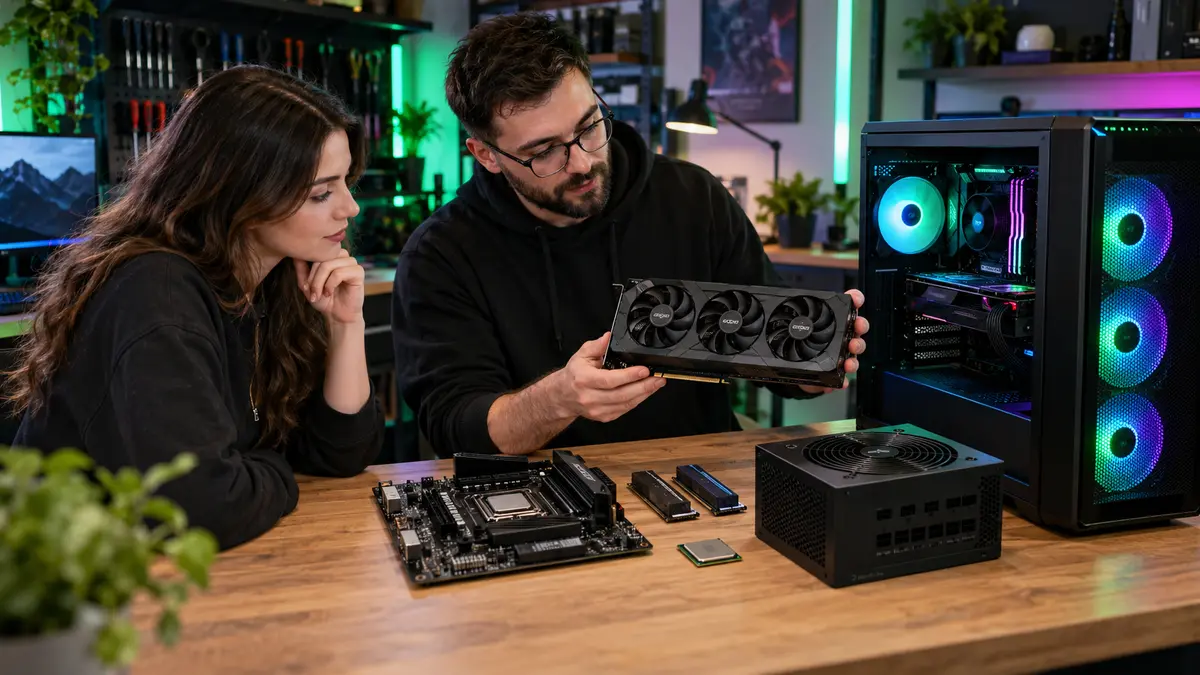
The console business is facing a difficult moment, according to reporting from Eurogamer. Sales of Xbox and PlayStation hardware in the US are described as reaching new lows, with analyst Mat Piscatella warning that the market has not been in such a precarious position since the early 1980s.
That is a serious comparison, although it is important to separate the analyst’s assessment from a confirmed repeat of the video game crash. Eurogamer reports that PS5 and Xbox Series X/S consoles are more expensive than before in most markets, and says memory components are being heavily consumed by AI data centres. The result is a tougher environment for anyone weighing up a new console, and a more complicated one for the companies trying to sell them.
Game Pass changes how success is measured
One example is Gears of War: E-Day. Eurogamer reports that the Xbox flagship has attracted more than 1.7 million Xbox Game Pass players and generated over $37 million since launch. The same report says its full-price sales are lighter than might be expected, but that a substantial share of revenue came from Game Pass subscribers paying to upgrade to the Premium Edition.
Those figures are reported rather than presented as a complete official performance breakdown. They do, however, illustrate why a game’s success can no longer be judged only by boxed copies or standard digital sales. A subscription can put a major release in front of more players, while optional upgrades may become an important part of the business model. For players, the trade-off is access to a large catalogue; for publishers, it is the challenge of converting that reach into sustainable revenue.
Skate draws a boundary around modding
Online games are also negotiating a line between player creativity and protected commercial systems. EA and Full Circle, the developer of the early-access Skate, have said they do not object to modding or creativity from players, according to Eurogamer’s report. The developers are drawing the line at tools intended to bypass the game’s systems to unlock paid cosmetics or unreleased content.
The distinction matters beyond one title. Mods can extend a game’s life, create new ways to play and build communities around a release. In a live-service game, however, changing or bypassing network-linked systems can affect paid items, unreleased material and the wider player economy. Players considering unofficial tools should therefore check the game’s rules carefully, particularly where online accounts or purchases are involved.
Modern Warfare 4 prepares another extraction challenge
Meanwhile, Xbox Wire has outlined five features for the forthcoming DMZ mode in Call of Duty: Modern Warfare 4. The mode is set on the new Hajin map and draws on locations and events from the campaign. Players will enter an open-world combat space, gather loot, complete objectives, fight enemies and rival Operators, then try to extract safely.
That structure puts risk and decision-making at the centre: every objective can improve a run, but staying longer may expose a player to more threats. Xbox Wire’s preview is an announcement from the platform, so the practical experience will have to wait until the mode is available. It does show, though, that extraction-style play remains a prominent way for big shooters to build tension around repeatable online sessions.
What players are spending time with
The mood is not simply negative. In its regular “What we’ve been playing” feature, Eurogamer says Dom has been enjoying a return to Gears of War, while Bertie has been continuing with The Blood of Dawnwalker before saving his family. That is a small but useful reminder that player interest is still driven by the games themselves, even as pricing, subscriptions and online systems shape how those games are sold.
For anyone deciding what to buy or play next, the practical takeaway is to look beyond the launch label: check whether a title is included with a subscription, what content requires an upgrade, and whether online features or third-party tools affect access. At The Tech Surgery, we see the same value in making informed choices with technology generally: understand the costs and requirements first, then choose the setup that fits how you actually play.